
Winter is one of the toughest seasons for RV owners. Cold temperatures, moisture, and long periods of storage can cause serious damage if your RV isn’t properly protected. Winterizing isn’t just a seasonal chore — it’s a critical step in keeping your rig safe, preventing expensive repairs, and ensuring your RV is ready to roll when camping season returns. Whether you own a travel trailer, 5th wheel, or motorhome, winterizing is one of the smartest maintenance habits you can adopt.
Cold weather can wreak havoc on your RV’s plumbing, electrical systems, seals, and exterior surfaces. The biggest threat is freezing water, which expands inside pipes and fittings, causing cracks, leaks, and burst lines. A single freeze can destroy your water pump, crack your water heater tank, or damage your PEX lines — repairs that easily run into hundreds of dollars.
Moisture is another enemy. Condensation builds inside RVs during winter, leading to mold, mildew, and musty odors. Winterizing helps reduce moisture buildup and protects your interior from long-term damage.
Finally, winterizing protects your RV’s battery, tires, roof, and exterior finish from harsh weather. Proper preparation keeps your rig in top shape and extends its lifespan.
Your RV’s plumbing system is the most vulnerable part during winter. To protect it:
Drain all water tanks
Open low-point drains
Flush and drain the water heater
Blow out water lines or fill them with RV antifreeze
Run antifreeze through faucets, toilet, and shower
Using RV-safe antifreeze ensures your lines stay protected even in freezing temperatures. This step alone prevents the majority of winter damage.
If you want a deeper dive into plumbing prep, you can explore RV plumbing winterization.
Cold weather drains batteries fast. Before storing your RV:
Disconnect the battery
Clean terminals
Store it in a warm, dry place
Keep it charged monthly
A neglected battery can freeze, crack, or lose capacity permanently. Battery care is one of the easiest winterizing steps — and one of the most important.
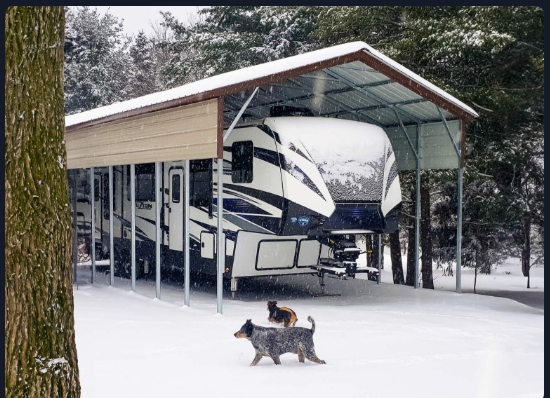
Your RV’s exterior takes a beating during winter. Snow, ice, and freezing rain can damage seals, paint, and roofing.
Inspect and reseal windows, doors, and roof seams
Cover vents and AC units
Use a breathable RV cover
Lubricate hinges, locks, and slide-out seals
A breathable cover prevents moisture buildup while protecting your RV from UV rays and winter weather.
A clean RV stores better. Before winter hits:
Remove all food
Clean fridge and freezer
Vacuum carpets and upholstery
Open cabinets for airflow
Use moisture absorbers
This prevents pests, mold, and odors from developing during long storage periods.
Your tires can develop flat spots if your RV sits for months. To prevent this:
Inflate tires to proper PSI
Use tire covers
Move the RV slightly every few weeks if possible
If your RV will be stored on dirt or grass, place boards under the tires to prevent moisture damage.
Winterizing your RV isn’t just about preventing damage — it’s about protecting your investment and ensuring your rig stays ready for adventure. A properly winterized RV lasts longer, performs better, and saves you money on repairs. Whether you store your RV in your driveway or at a dedicated facility, taking the time to winterize it correctly is one of the best things you can do for long-term reliability.